

I’m a happy founder.

.avif)

Four failures. Would you start again?
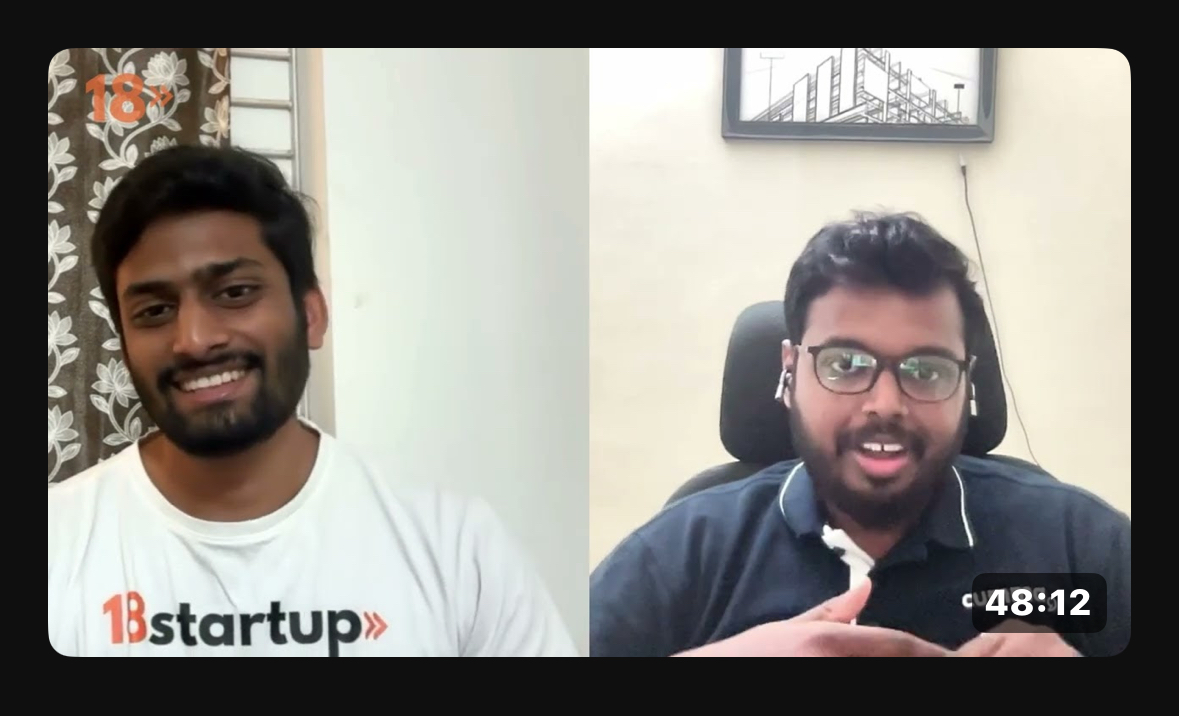
If you ask Gautham about his startup , he won’t start with funding.
He’ll say, “I’m a happy founder.” Its very rare. And the best part,he means it. But it wasn’t always like this.
Who is Gautham?
A day before his UK visa interview, everything fell apart. Seven university offers & A master’s program abroad..
Then a bank manager changed,
Documents didn’t get cleared,
The visa was rejected, Gautham landed in debt instead of London…
He went from preparing for higher studies abroad to delivering food on the streets - the only job that didn’t ask for experience.
Four Startups. Four Different Failures.
Before CUMMA, he built four startups. Each lasted about a year & Each failed for a different reason-
- he tried to do everything alone.
- he trusted friends blindly as co-founders.
- he built without validating with customers.
- he didn’t know how to handle early success.
That fourth lesson stayed with him. Failure is manageable, Success can destroy you if you’re not ready. Still, he is glad he failed four times because he never repeated the same mistake twice..
The real turning point wasn’t business. It was mindset, He realized he was still thinking like an incubation manager. Observing founders. Advising them. Speaking theory. He hadn’t fully stepped into the founder identity.
“I had to re-identify myself as a startup founder,” he says. That shift created CUMMA.
Why CUMMA?
While working in the ecosystem, one gap was obvious.
-Infrastructure existed.
-Labs existed.
-Innovation spaces existed.
But access was broken.
Too much bureaucracy, Too much friction and Too little structured discovery.
CUMMA was built as India’s first marketplace for innovation infrastructure. beyond co-working. Labs, institutional facilities, technical spaces made accessible like booking travel. That was the ambition! Early days weren’t clean. For six to eight months, they were stuck trying to build everything customers asked for. Listening is good. Building everything is not.
Around that time, he entered 18startup’s bootcamp in Pune : Cohort 6.
He admits something interesting: initially he didn’t understand why the focus was so much on the founder instead of just the product. By the end, he understood. If the founder is unclear, the company remains unclear.
That phase gave him direction, discipline, and distraction control.
Fundraising took 54 conversations.
The first 53 were rejections. The 54th resulted in ₹21 crore, They diluted 54.5%…
It wasn’t emotional. It wasn’t pressure. It was strategic.
“We didn’t want to save ourselves. We wanted to save the company.”
And that is how founders really think! Even after raising ₹21 crore, only one-seventh is being deployed. The rest remains strategic reserve. They weren’t just looking for capital. They wanted market access, BD strength, expansion capability and speed.
Now CUMMA is entering Version 2.0 -shifting from transactional SaaS to a hybrid subscription-plus-transaction model, with APIs opening and national expansion underway.
His biggest fear isn’t funding. It’s mishandling success. When he rates his journey, he says 8 to 8.5 out of 10, not because it was easy, but because he didn’t repeat his mistakes. His leadership philosophy is clear: in their version of chess, the king protects the sepoys - not the other way around.
From four failed ventures to building CUMMA, the journey wasn’t dramatic. It was disciplined.
To hear the full story in his own words, watch the complete InnerCircle podcast on YouTube.
If you’re building a startup and feel stuck at any stage, 18startup has the right programs and support to help you move forward.
.avif) 👉 Know More...
👉 Know More...